🔔People at Work is closing 2 October 2026.Here’s how to migrate →

Your survey shows you what staff feel safe saying. CPM shows you what they hold back.

The Culture Pressure Map™ is a psychosocial risk diagnostic built for organisational culture. It pairs a psychosocial hazard and risk screening with organisational culture via structured ethnographic investigation. The findings flow into psychosocial hazard identification, risk assessment and organisational culture analysis at three layers — the kind of evidence boards and insurers may look for.

Covers all 15 SafeWork NSW hazards Sexual harassment + remote/isolated work Vic gendered-violence compliant
What you actually see

Board-grade output. Generated in minutes, not weeks.

The Culture Pressure Map™ — the signature visualisation produced by every Screening.

The Culture Pressure Map™

Sample output

3 culture layers × 5 hazard categories. Score = mean of mapped PMQ items (1–5 scale, higher is better). Colour = pressure band.

Low(≥ 4.0)Guarded(3.7–4.0)Medium(3.3–3.7)High(3.0–3.3)Critical(< 3.0)No data
Work Design
Relational
Exposure & Environment
Justice & Change
Cultural Blind Spots
Ethos culture
Espoused values, formal policies, leadership messaging
4.3
Low
3.8
Guarded
3.5
Medium
2.7
Critical
3.1
High
Subcultures
Departments, divisions, occupational groups
4.0
Low
3.1
High
No data
No data
3.5
Medium
Microcultures
Teams, workgroups, dyads — where risk shows first
3.7
Guarded
2.6
Critical
3.2
High
No data
4.5
Low
Why surveys aren't enough

Surveys capture what people say.
They often miss what they enact.

Peer-reviewed research published in the Health Promotion Journal of Australia in 2024 makes the case directly: surveys produce static manifestations of cultural knowledge. They surface what employees feel safe enough to say in a structured form. They miss the back stage sites of enactment — the microcultures where cultural pressure typically lives.

The Culture Pressure Map™ is built around what the research says you need: a screening layer to find the hotspots, then an ethnographic investigation layer to understand what's actually happening inside them.

The method

Screen. Investigate. Intervene.

Two diagnostic stages built directly from the published CPM framework,
plus the action layer most tools forget.

Stage 1

Culture Pressure Map™
Screening

An 82-item instrument across 3 culture layers (Ethos · Subcultures · Microcultures) covering all 15 SafeWork NSW psychosocial hazards plus the Vic gendered-violence requirement. Tells you where the cultural pressure is concentrated. ~12 mins per respondent.

Stage 2

Culture Pressure Map™
Investigation

For every hotspot the Screening reveals, CPM guides your PCBU through a structured ethnographic investigation. The signature CPM diagnostic.

Stage 3

Culture Development Roadmap

34+ evidence-based interventions mapped to each hazard and each CPM signature index, plus a board-ready report combining quantitative and ethnographic findings.

How to read the scores

Culture Pressure Map™ Scale

Every hazard sits on the 1–5 PMQ scale (higher = more positive, less pressure) and falls into one of six bands — each signals a different management response.

Low
≥ 4.0

Maintain culture. No immediate action required.

Guarded
3.7 – 4.0

Monitor culture. Watch for cultural shifts. Prepare cultural interventions.

Medium
3.3 – 3.7

Investigate. Cultural pressure is forming — look closer.

High
3.0 – 3.3

Intervene. Layer-appropriate cultural action needed now.

Critical
< 3.0

Urgent. Immediate cultural intervention; document escalation.

No data

Coverage gap. Existing data doesn't reach here.

The action gap

A survey without follow-through is data with no consequence.

Most organisations run a culture survey, file the report, and move on. Staff are asked again the following year — and notice nothing changed. Engagement drops; cynicism builds; the next response rate is lower than the last. The problem isn't the survey. It's what came after.

CPM is built for the part most tools skip. Every hotspot the Screening surfaces routes to evidence-based interventions, and your Culture Development Roadmap sequences them so the data leads to actual change — not a slide deck on a shelf.

What's inside

What's inside the platform

Full coverage across SafeWork NSW and Vic Psychological Health hazards, the signature diagnostic constructs from the CPM academic framework, and the documentation your board and insurer could expect.

📊

Culture Pressure Map™ Screening

82 items, 3 culture layers, 5 hazard categories, 17 regulated hazards. Anonymous, segmented by department.

📂

Data Analysis

Upload existing engagement surveys, focus group transcripts, or workshop notes. Auto-mapped to the 14 SafeWork NSW hazards and 3 CPM culture layers in seconds — no manual recoding. Board-grade Coverage Map shows what your existing data reveals and what it cannot see.

🗺️

Culture Pressure Map™ Visualisation

3 layers × 5 categories heatmap plus a dedicated panel for the 7 CPM signature indices.

⚠️

Full Hazard Coverage

Covers all 15 SafeWork NSW psychosocial hazards including sexual harassment, remote/isolated work, and gendered violence.

📄

Reports

One report combines Stage 1 quantitative findings with Stage 2 ethnographic evidence.

🎓

Expert Network

Optional access to organisational ethnographers to run Stage 2 Research and Analysis.

Operational detail

Down to the department.

Every Screening ranks each department by mean cultural pressure, so you know which teams to address first.

Departmental breakdown

Sample output

Mean cultural pressure score per department, ranked highest to lowest.

Department · 365 responsesCultural pressure
Mental Health34
2.80 / 5CRITICAL
ICU41
3.10 / 5HIGH
Aged Care38
3.20 / 5HIGH
Emergency Department52
3.30 / 5MEDIUM
Surgery29
3.50 / 5MEDIUM
Outpatient Clinics31
3.60 / 5MEDIUM
IT22
3.70 / 5GUARDED
Allied Health27
3.80 / 5GUARDED
Administration33
3.80 / 5GUARDED
Facilities & Maintenance19
4.00 / 5LOW
Human Resources18
4.10 / 5LOW
Finance21
4.30 / 5LOW
Pricing

Two ways to engage

Self-serve the Diagnostic. Commission the Investigation when the patterns warrant a deeper look.

Low tier

Culture Pressure Map™ Screening

AU$4,950 /yr ex. GST

Up to 200 employees

  • Unlimited Screenings
  • All 82 questions · 3 layers × 5 hazard categories
  • All 8 signature diagnostic indices
  • Auto-generated Risk Assessment (PDF)
  • NSW + Vic regulator-aligned hazard views
  • Incident & control registers, evidence uploads
Get started →
Most popular
Mid tier

Culture Pressure Map™ Screening

AU$12,950 /yr ex. GST

Up to 1,000 employees

  • Everything in the Low tier
  • Department × hazard matrix + radial pressure map
  • Multi-department segmentation
  • Board-grade PDF reports
  • Personal onboarding walkthrough on request
Get started →
Enterprise

Culture Pressure Map™ Screening

Custom · by quote

Unlimited employees · multi-site

  • Everything in the Mid tier
  • Multi-site / multi-entity support
  • Priority support from Dr Anna Kiaos
  • Custom report branding
  • Annual board-readiness review session
  • Bespoke pricing after a scoping conversation
Request a quote →

Not sure which tier? Ask Dr Anna Kiaos for a personal demo →

Stage 2 · The Investigation · Culture Development Roadmap

Organisational Ethnographic Investigation

From AU$4,500*

Bespoke quote. Delivered personally by Dr Anna Kiaos.

When the Screening has reached the limit of what a survey can detect, the Investigation goes after the why. 4–8 weeks of qualitative fieldwork, trust-based interviews, and direct observation of how work actually gets done in your priority hotspots.

  • 4–8 weeks of fieldwork by a registered workplace investigator
  • Confidential trust-based interviews across priority departments
  • Direct observation of work-as-done vs work-as-imagined
  • Qualitative insights from focus groups, exit interviews, complaints
  • Triangulation of Screening data against lived back-stage dynamics
  • Board-grade Investigation report with sequenced remediation
  • Optional Stage 3 leadership coaching as controls embed

* Indicative starting point for the Investigation. Final quote is agreed after a complimentary scoping conversation — pricing varies with organisation size, number of departments, on-site days, interview volume, and Investigation depth.

About the Founder

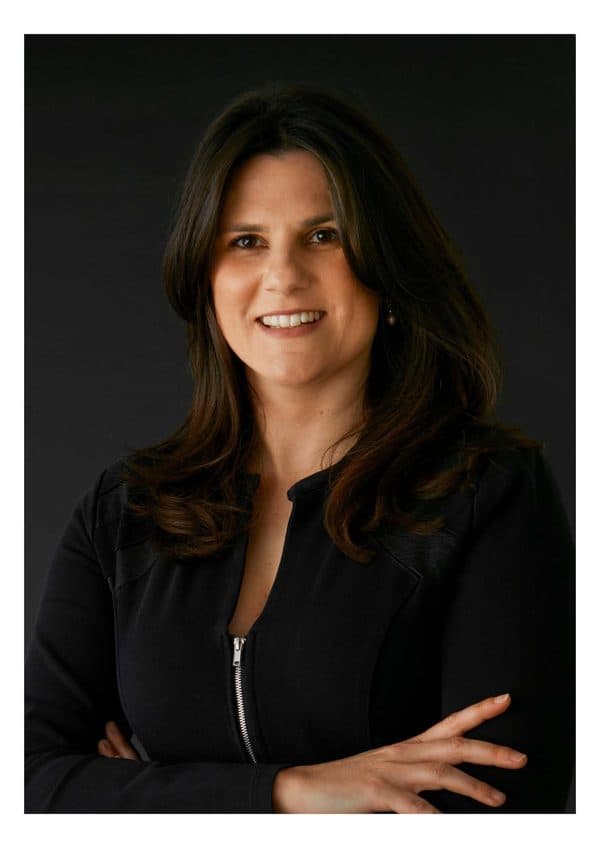
Dr Anna Kiaos

Dr Anna Kiaos, Founder of Mind Culture Life Australia

Dr Anna Kiaos is the Founder and Director of Mind Culture Life Australia, and the creator of the Culture Pressure Map™. She is an organisational ethnographer, specialist workplace therapist, and workplace investigator — a combination that places her practice at the intersection of individual therapeutic care and organisational accountability.

Anna holds a current affiliation with the University of New South Wales (UNSW Sydney), where her research focuses on organisational culture and psychosocial hazards in workplaces. She is engaged regularly by public-sector organisations and private-sector clients navigating the cultural consequences of challenging organisational events.

Anna is known for clinical rigour, for refusing to over-promise on what any intervention can do, and for being willing to push back on briefs where her professional view is that the work as scoped will not serve the client's actual interests. The Culture Pressure Map™ platform reflects that same posture.

Based in Sydney. MCL Australia, Level 35, Tower One — International Towers, 100 Barangaroo Avenue, Sydney NSW 2000.
Ready to map the cultural pressure in your organisation?

Start with the Culture Pressure Map™ Screening.
Add the Culture Pressure Map™ Investigation when the Screening flags something that needs more attention.

Important Information

A Culture Pressure Map™ diagnostic identifies cultural pressure patterns and psychosocial risk indicators based on qualitative and quantitative data. It represents a point-in-time assessment, not a comprehensive audit of all organisational risks. No cultural diagnostic can guarantee the identification of every risk factor or the prevention of psychological injury. Responsibility for acting on findings and managing workplace psychosocial hazards remains with the engaging organisation.